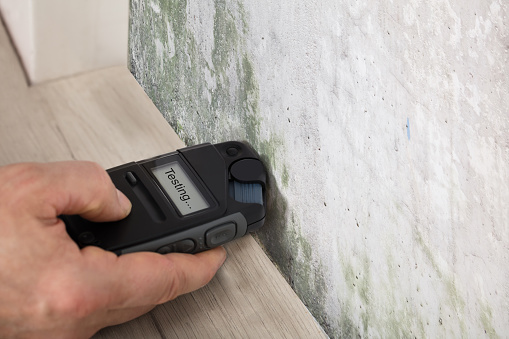
Why Mold Inspections Fail Mold-Sensitive People
Mold inspection failures are especially common for mold-sensitive individuals.
Many inspections rely on visual assessments and short-term air samples, which are not designed to detect hidden or active mold sources.

Mold growing inside walls or sealed building cavities may never release enough spores to trigger a positive test. However, these colonies can still emit gases that affect neurological, respiratory, and immune function. This is why people can feel severely ill even when inspections say everything looks fine.
Mold Dog Knows focuses on activity rather than appearance. Our AWDA-certified detection dogs are trained specifically to locate gases released by active toxic mold. This allows for precise identification of problem areas without invasive or unnecessary demolition.
Our teams bring decades of elite K9 handling experience and operate under medical guidance from a mold-literate doctor. This ensures findings are interpreted within a health-based context, not just a building science perspective.
To learn more about our mission and methodology, visit Mold Dog Knows or explore Meet the Team. For background on why this work exists, see our About Us page.
If you suspect your home is affecting your health, Book Your 20-Minute Consult for clarity.
Q&A:
Why do mold inspections miss hidden mold?
Most inspections focus on visible mold and spores, not gases from active growth.
Are mold detection dogs more accurate than air tests?
They can detect active mold sources regardless of visibility or spore levels.
Who should consider K9 mold detection?
Anyone with persistent symptoms despite normal inspections.
